Why Tutoring Is So Beneficial for Kids: More Than Just Better Grades

Why Tutoring Is So Beneficial for Kids: 

More Than Just Better Grades


CHRIS LEUZINGER

At Nourishing Minds Tutoring, we believe every child deserves the chance to thrive—not just survive—in their academic journey. While tutoring is often seen as a solution for falling behind or improving grades, its benefits go far beyond report cards and test scores. Here’s why tutoring can make a lasting, positive impact on your child’s confidence, curiosity, and love of learning.

  • 1. Personalized Learning That Meets Kids Where They Are

    In a classroom setting, it can be difficult for teachers to tailor lessons to every student’s learning style or pace. Tutoring offers a one-on-one or small-group experience where instruction is customized to fit your child’s unique needs. Whether your child learns best through visuals, movement, or discussion, tutoring helps them absorb material in a way that truly clicks.

  • 2. Boosting Confidence and Motivation

    Struggling in school can take a serious toll on a child’s self-esteem. One of the most powerful aspects of tutoring is the confidence boost that comes with finally “getting it.” As students experience success—often for the first time in a long while—they become more motivated to take on challenges, ask questions, and actively participate in their learning.

  • 3. Filling in Gaps and Reinforcing Foundations

    Kids can fall behind for many reasons: illness, learning differences, busy classrooms, or even pandemic-related disruptions. Tutoring provides a chance to go back and fill in the gaps, reinforce foundational skills, and build a strong academic base. This makes future learning easier and more meaningful.

  • 4. Improving Study Habits and Life Skills

    Tutoring doesn’t just focus on academic content—it also teaches important executive functioning skills like organization, time management, test preparation, and goal setting. These are life skills that serve students well beyond the classroom, helping them become more independent and responsible learners.

  • 5. Encouraging a Growth Mindset

    Tutoring helps kids reframe the way they view intelligence and learning. With the right support, they begin to see that abilities can be developed through effort and perseverance. This mindset shift makes them more resilient in the face of academic challenges and better prepared to tackle new material.

  • 6. Creating a Safe, Supportive Space to Ask Questions

    Many kids hesitate to ask questions in front of their peers out of fear of judgment. In a tutoring session, there’s no such thing as a silly question. Our tutors create a nurturing environment where kids feel seen, heard, and encouraged to be curious without pressure or embarrassment.


At Nourishing Minds, We See the Whole Child 

We’re not just here to help kids pass a test—we’re here to nurture their minds, fuel their confidence, and help them develop a lifelong love of learning. Tutoring is a powerful tool that empowers kids to thrive both in and out of the classroom.
Want to learn more about how Nourishing Minds Tutoring can support your child? Contact us today to schedule a
free consultation!

Continue reading

Tutoring, and Translating Success: Buying Local

Buying Local with Chris Leuzinger:
Tutoring, and Translating Success

In this episode of Buying Local, our host Mike Nelson of Five Towers Media interviews Chris Leuzinger, owner of Nourishing Minds Tutoring and Chief at Wilton Fire Department.

Tune in to hear them discuss diving into entrepreneurship without a backup plan, building a strong team to drive a company’s success, the power of investing in yourself for career growth, and much more! Chris shares his personal journey balancing business ownership with public service, offering valuable lessons in leadership, resilience, and community impact. Whether you’re an aspiring entrepreneur or simply love a good success story, this episode is packed with inspiration, practical advice, and a behind-the-scenes look at local business growth.

Big thanks to Glens Falls Business Report, Saratoga Business Report, and Five Towers for having us! Make sure to check out their other episodes here.


Nourishing Minds Tutoring has been the leader in private tutoring in the Capital Region for over 9 years. 

We offer qualified, reliable, and knowledgeable tutors who are expert teachers. We take the time to develop a rapport with each student to enable them to reach their fullest academic potential. Simply put, we believe that it is our job to make learning happen.

Continue reading

Hidden Vision Challenges and Their Link to Success in the Classroom

Hidden Vision Challenges
& Their Link to Success in the Classroom


Dr. McKenzie Symons, OD
Adirondack Pediatric Vision & Rehabilitation

Vision is one of the most important tools a child needs to succeed in the classroom.

Around 70% of classroom learning is done through visual means, yet up to 1 in 5 children in every classroom struggle with vision-related learning challenges that often go undetected. These hidden visual problems can manifest as difficulty with reading, writing, eye tracking, attention, self-esteem and behavioral challenges. Vision difficulties are not just limited to seeing the board clearly, and often children have no idea that what they are experiencing is not normal.

As a child progresses in school, there is an increasing demand on their visual systems. The print tends to get smaller and the emphasis and time spent on reading quickly increases. When the visual system is not working correctly, this increase in demand can lead to headaches, eyestrain, double vision, decreased tracking ability, poor reading comprehension, frustration, poor self-esteem and several other symptoms. Below is a list of common signs and symptoms of vision-related learning problems that your child may be struggling with:

  • Complaints of eyestrain or fatigue
  • Eye rubbing
  • Avoidance of near work and reading
  • Does better when read to
  • Losing place while reading
  • Holding reading material close to face
  • Tilting head or covering/closing one eye
  • Double vision or reports of words moving or swimming on the page
  • Headaches
  • Frustration and increased anxiety with school and school work
  • Mismatch between what you know your child is capable of versus how they perform
  • Decreased attention span with near work

A comprehensive developmental eye exam not only checks for clear vision, but also evaluates critical visual skills such as eye tracking, eye focusing, eye teaming, eye-hand coordination and the ability to work comfortably at close distances. These visual skills which are all vital for success inside and outside of the classroom.

For more information, please visit: www.adirondackpediatricvision.com


Nourishing Minds Tutoring has been the leader in private tutoring in the Capital Region for over 9 years. 

We offer qualified, reliable, and knowledgeable tutors who are expert teachers. We take the time to develop a rapport with each student to enable them to reach their fullest academic potential. Simply put, we believe that it is our job to make learning happen.

Continue reading

Private Tutoring and it Can Support Student’s Mental Health

Building Resilience: 

How Private Tutoring Can Support Mental Health in Students


CHRIS LEUZINGER

Today’s students are under more pressure than ever before. Between juggling demanding academic schedules, extracurricular activities, social expectations, and the constant noise of social media, it’s no wonder that anxiety and stress levels are on the rise among young people. According to a 2021 study by the Centers for Disease Control and Prevention (CDC), nearly 37% of high school students reported experiencing poor mental health during the pandemic, with rising rates of anxiety and depression.

In this high-stress environment, parents are understandably concerned about their children’s well-being. They want to ensure that their kids are not only succeeding academically but also developing the emotional resilience needed to navigate life’s challenges. This is where private tutoring can play a crucial role—not just as a tool for improving grades, but as a powerful support system for mental health. By offering personalized attention, emotional support, and a safe space to learn and grow, tutoring provides students with much-needed relief from the pressures they face.

The Stressors Today’s Students Face

Academic pressure is nothing new, but the intensity has skyrocketed in recent years. Many students feel they must excel in every subject, maintain a perfect GPA, and stack up extracurriculars to secure a bright future. The competitive nature of college admissions only amplifies this pressure. 

Beyond academics, social media contributes significantly to the mental health challenges students face. The constant comparison with peers, exposure to cyberbullying, and the pressure to curate a perfect online persona can weigh heavily on students’ self-esteem. A study from the American Psychological Association found that 90% of teens are active on social media, and many report feeling overwhelmed by the unrealistic standards and pressures they encounter online.

In this environment, it’s easy for students to feel overwhelmed, isolated, and unable to cope. Many parents recognize these struggles but are unsure how to help their children manage them effectively.

Private Tutoring as a Safe Space

While tutoring is traditionally seen as a way to improve grades, its benefits go far beyond academic achievement. One of the most valuable aspects of private tutoring is the safe, one-on-one environment it provides. Unlike a crowded classroom where students might feel intimidated or afraid to ask questions, tutoring sessions allow students to express their concerns and difficulties freely. 

Tutors often develop close, trusting relationships with their students. These relationships can provide much-needed emotional support, especially for students who are struggling with anxiety or stress. A good tutor understands that learning isn’t just about mastering material—it’s also about building confidence, resilience, and a positive mindset. 

In fact, research from the Sutton Trust, a UK-based educational charity, found that students who receive one-on-one tutoring not only improve their grades but also report increased self-confidence and a more positive attitude toward learning. When students feel supported and understood, they’re better equipped to face academic challenges and manage stress.

Building Emotional Resilience Through Personalized Learning

Private tutoring is inherently personalized, which allows tutors to tailor their approach to each student’s unique needs. This individualized attention is crucial for building emotional resilience. When tutors understand a student’s learning style, they can help that student develop effective strategies for managing challenges, both academically and emotionally. 

For example, a student who is easily overwhelmed by large assignments might benefit from breaking the work into smaller, more manageable tasks. A tutor can teach this student how to prioritize and manage time effectively, reducing the stress that comes with looming deadlines. Similarly, tutors can work with students to develop growth mindsets—helping them see mistakes as opportunities for learning rather than as failures. 

This kind of personalized support fosters resilience by teaching students how to handle setbacks. When students realize they can overcome obstacles with the right strategies, they’re less likely to feel defeated by academic or personal challenges.

Mentorship Beyond Academics

The role of a tutor often extends beyond academics. Many tutors act as mentors, offering advice and guidance on a wide range of issues, from school stress to social dynamics. This mentoring relationship is especially important for students who may not feel comfortable discussing their concerns with teachers or even parents.

A tutor who understands the student’s challenges can offer practical strategies for coping with anxiety, managing time, or even handling peer pressure. The ability to talk openly with a trusted adult who is invested in their success can make a world of difference for students facing mental health challenges.

The Parent-Tutor Partnership: Supporting Mental Health

Parents play a critical role in supporting their children’s mental health, but they often feel at a loss when it comes to academic stress. By partnering with a tutor, parents can ensure their children have a holistic support system. Tutors provide an outside perspective, recognizing signs of burnout or anxiety that parents or teachers might overlook. 

Tutors can also serve as liaisons between parents and schools, offering insight into a student’s needs and helping create a supportive academic plan. In doing so, tutors empower parents to be more proactive in addressing their children’s mental health while ensuring that academic progress remains steady.

Conclusion: Tutoring as a Lifeline for Mental Health

Private tutoring offers much more than academic support—it provides students with the emotional and mental scaffolding they need to thrive in today’s high-pressure world. By offering personalized learning, emotional support, and mentorship, tutors help students build resilience, develop coping strategies, and approach challenges with confidence.

For parents looking to nurture their child’s mental health while ensuring academic success, private tutoring offers a holistic solution—one that understands that learning is as much about emotional growth as it is about intellectual achievement. With the right support, students can not only excel academically but also build the resilience they need to navigate life’s ups and downs.


Nourishing Minds Tutoring has been the leader in private tutoring in the Capital Region for over 9 years. 

We offer qualified, reliable, and knowledgeable tutors who are expert teachers. We take the time to develop a rapport with each student to enable them to reach their fullest academic potential. Simply put, we believe that it is our job to make learning happen.

Continue reading

Top Tips for New Middle and High School Students

Mastering Effective Study Techniques:

Top Tips for Middle and High School Students


CHRIS LEUZINGER

Studying effectively is a skill that can make a big difference in your academic success. Whether you’re in middle school or high school, developing good study habits can help you understand and retain information better. Here are some top tips to help you study effectively:

  • 1. Create a Study Schedule

    One of the most important steps to effective studying is creating a schedule. Plan your study sessions in advance, and stick to the schedule. Break your study time into manageable chunks, such as 30-45 minute sessions, and take short breaks in between. Consistency is key, so try to study at the same time each day to build a routine.

  • 2. Set Specific Goals

    Setting specific goals for each study session can help you stay focused and motivated. Instead of just saying, “I need to study math,” set a specific goal like, “I will complete 20 algebra problems.” Having clear objectives helps you measure your progress and keeps you on track.

  • 3. Find a Good Study Environment

    Your study environment can greatly affect your concentration and productivity. Find a quiet, well-lit place where you won’t be easily distracted. Make sure your study area is organized and free from clutter. Some people find that listening to soft music helps them concentrate, while others prefer complete silence. Figure out what works best for you.

  • 4. Use Active Learning Techniques

    Active learning involves engaging with the material, rather than just passively reading or listening. Some effective active learning techniques include:

    – Summarizing: Write summaries of what you’ve learned in your own words.

    – Quizzing: Test yourself on the material, or have someone else quiz you.

    – Teaching: Explain the material to someone else. Teaching is a great way to reinforce your understanding.

    – Using Flashcards: Create flashcards for key terms and concepts. This can help with memorization and recall.

  • 5. Take Effective Notes

    Good note-taking is essential for effective studying. During class, write down key points and important information. After class, review and organize your notes. Use headings, bullet points, and highlighting to make your notes easy to read and review. Consider using the Cornell Note-Taking System, which divides your paper into sections for notes, key points, and a summary.

  • 6. Practice Time Management

    Managing your time effectively is crucial for balancing schoolwork with other activities. Prioritize your tasks and focus on the most important ones first. Avoid procrastination by breaking large projects into smaller, manageable tasks. Use tools like planners, calendars, or apps to keep track of assignments and deadlines.

  • 7. Stay Healthy

    Your physical and mental health play a significant role in your ability to study effectively. Make sure you’re getting enough sleep, eating a balanced diet, and exercising regularly. Staying hydrated and taking short breaks during study sessions can also help you stay focused and energized.

  • 8. Use Study Groups Wisely

    Study groups can be beneficial if used correctly. Collaborating with classmates can provide different perspectives and help clarify difficult concepts. However, make sure your study group stays focused on the task at hand and doesn’t turn into a social gathering.

  • 9. Seek Help When Needed

    Don’t be afraid to ask for help if you’re struggling with a subject. Reach out to your teachers, classmates, or a tutor. Sometimes, a different explanation can make a big difference in your understanding.

  • 10. Review Regularly

    Regular review is essential for retaining information. Instead of cramming the night before a test, review your notes and materials regularly. This helps reinforce what you’ve learned and makes it easier to recall information during exams.

  • Conclusion

    Effective studying is all about finding what works best for you and sticking to it. By creating a study schedule, setting specific goals, finding a good study environment, and using active learning techniques, you can improve your study habits and achieve academic success. Remember to take care of your health, manage your time wisely, and seek help when needed. With these tips, you’ll be well on your way to becoming a more effective and confident student.


Nourishing Minds Tutoring has been the leader in private tutoring in the Capital Region for over 9 years. 

We offer qualified, reliable, and knowledgeable tutors who are expert teachers. We take the time to develop a rapport with each student to enable them to reach their fullest academic potential. Simply put, we believe that it is our job to make learning happen.

Continue reading

Tutoring Tips to Help Prevent the Summer Slide

Tutoring Tips for Preventing the Dreaded Summer Slide!


CHRIS LEUZINGER

The summer is almost upon us, and most children will not see the inside of a classroom for at least two months. This is an eternity for young minds, and coupled with the lack of structured learning activities, children often forget what they have learned throughout the school year. Thankfully, it is easy to prevent much of this “summer slide” by following our practical tips offered below.

Make Educational Experiences a Priority This Summer

Summer is a great time to engage in diverse learning activities. Explore local museums, participate in kids’ programs, enjoy nature walks, and engage in outdoor adventures. Discuss these experiences with your children to enhance their learning. Research shows that children exposed to a variety of experiences perform better academically.

Here in Saratoga Springs, we have numerous educational venues such as the The Children’s Museum at Saratoga, the Tang Teaching Museum,the Dance Museum, and the National Museum of Racing and Hall of Fame. In addition there is also the New York State Museum, miSci (Museum of Innovation and Science), and even the Via Aquarium! These places not only offer learning opportunities but also make for exciting family outings.

Additionally, participating in local kids’ programs, such as those offered by the YMCA or your public library, can provide structured yet enjoyable learning experiences. For example, the Saratoga Springs Public Library holds a variety of different events and workshops for kids over the summer!

Participating in these activities can spark an interest in these fields and develop critical thinking and problem-solving skills.

Read Daily

Encourage a daily reading habit. Children should aim to read for at least 15 to 20 minutes every day. Make reading enjoyable by joining programs like The Scholastic Summer Challenge, where kids can read books, log their minutes, and earn virtual rewards. Visit your local library to discover new books and participate in summer reading events!

Reading should be a fun and rewarding experience. Consider creating a summer reading nook at home, complete with comfortable seating and a selection of books. Encourage your child to choose books that interest them, whether it’s fiction, non-fiction, graphic novels, or magazines. Joining a summer reading program can also add a competitive edge, making the activity even more engaging.

For younger children, consider incorporating read-aloud sessions into your daily routine. This not only helps with their reading skills but also fosters a love for stories and learning. For older children, discussing the books they read and encouraging them to write book reports or reviews can enhance their comprehension and critical thinking skills.

Encourage Math Skills

Incorporate math into everyday activities. Play board games like Monopoly that involve counting and financial skills. Engage in crafts or construction projects where children measure dimensions and follow instructions. A quick online search can reveal numerous fun, summer-themed math activities.

Allow children to handle money, such as paying for ice cream, to practice their mental math skills. You could even resort to setting up a good ole lemonade stand, or having them hold a small yard sale — a 2-for-1 for parents if you can get your kids to give up some of their older toys/electronics…

Additionally, consider setting up a small “store” at home where your children can use play money to buy and sell items. This can teach them basic arithmetic, budgeting, and financial literacy in a fun, hands-on way. Cooking and baking are also excellent for practicing math skills, as they involve measuring ingredients, following sequences, and working with fractions.

Take Advantage of the Internet on Those Rainy Days

There are a plethora of free games and apps designed to make learning fun. Children can practice concepts learned during the school year, which will help them retain the information they have learned. Many educational websites offer engaging content tailored to different grade levels.

Here’s a few to check out:

  • Funbrain offers a wide range of interactive games, books, videos, and comics. The website is divided into different grade levels and subjects, making it easy to find age-appropriate content. Games focus on math, reading, problem-solving, and literacy skills.

  • National Geographic Kids features educational games that teach children about animals, geography, science, and history. The games are designed to be fun and interactive, promoting learning through exploration and discovery. The website also includes videos, quizzes, and articles to complement the games.
  • Coolmath Games offers a variety of math-focused games that are both entertaining and educational. The website is designed for older kids and teens who want to practice math skills in a fun and engaging way. Games range from basic arithmetic to more complex concepts like algebra and geometry.
  • Prodigy Math Game is a role-playing game where children can practice math skills in a fantasy world. The game adapts to each child’s learning level, providing challenges that are aligned with school curricula. It covers a wide range of math topics and allows kids to compete against their friends.
  • Code.org provides a variety of coding games and activities for kids of all ages. The platform offers tutorials and projects that teach the basics of computer programming through engaging games and puzzles. It’s an excellent resource for introducing children to the world of coding and computer science.
  • BrainPOP offers a wide range of educational games covering subjects such as science, social studies, English, math, arts, and music. The site is divided into BrainPOP Jr. (for younger children), BrainPOP (for upper elementary and middle school), and BrainPOP ELL (for English language learners). The games are designed to be both fun and educational, promoting critical thinking and problem-solving skills.

Utilizing educational technology can keep children engaged and learning even when they can’t go outside. Many websites and apps offer interactive lessons in subjects like math, science, reading, and more. Educational videos and interactive apps can make complex subjects more understandable and engaging, keeping children intellectually stimulated.

Maintain a Balanced Schedule

While educational activities are essential, it’s also crucial to ensure children have time to relax and enjoy their summer. Balance structured learning with free play, sports, and other hobbies to keep them engaged and happy.

Physical activities like sports and outdoor play are crucial for their physical and mental well-being. Encourage hobbies such as drawing, playing an instrument, or gardening, which can be both relaxing and educational.

Promote Writing Skills

Writing is a fundamental skill that benefits from regular practice. Encourage your children to keep a summer journal where they can write about their daily activities, thoughts, and feelings. This practice not only improves writing skills but also helps in reflecting on their experiences and expressing creativity.

Writing stories, poems, or even comic strips can also be a fun way to enhance their writing and storytelling abilities. For older children, consider introducing them to blogging or digital storytelling platforms.

Hire a Summer Tutor!

A professional tutor can design a personalized learning program with your child’s specific educational needs in mind. A tutor will ensure that your child is fluent with last year’s academic content, but can also help prepare for success in the fall!

Just one hour a week can build confidence and stop that dreaded summer slide, giving your child an advantage in September.

Tutoring services can be especially beneficial for students who struggled during the school year or need extra help in certain subjects. Personalized tutoring can address specific learning gaps and reinforce foundational skills that may otherwise be lost over the summer months.

TLDR: 

Preventing the summer slide requires a mix of educational activities, daily routines, and professional support. By making learning fun and varied, you can ensure your children return to school ready and confident. If you’re in the Capital Region and looking for summer tutoring, reach out to us!

Remember, summer is not just a break from school; it’s an opportunity to explore new interests, reinforce academic skills, and grow in various aspects of life. By incorporating these tips and strategies, you can help your child enjoy a fulfilling and enriching summer.


Nourishing Minds Tutoring has been the leader in private tutoring in the Capital Region for over 9 years. 

We offer qualified, reliable, and knowledgeable tutors who are expert teachers. We take the time to develop a rapport with each student to enable them to reach their fullest academic potential. Simply put, we believe that it is our job to make learning happen.

Continue reading

A Guide to Understanding Executive Functioning in Adolescents

Understanding Executive Functioning
in Kids and Teens


CHRIS LEUZINGER

Executive functioning is a set of cognitive processes essential for controlling behavior and achieving goals. These skills include working memory, cognitive flexibility, and inhibitory control. In children and teens, executive functioning is crucial for academic success, social interactions, and overall development.

Let’s explore what executive functioning entails and provide practical suggestions for improving these skills in young people.

What is Executive Functioning?

Executive functioning refers to a group of mental skills that help individuals manage their thoughts, actions, and emotions to accomplish tasks. These skills include:

  1. Working Memory: The ability to hold and manipulate information over short periods.
  2. Cognitive Flexibility: The capacity to adapt to new situations and think about multiple concepts simultaneously.
  3. Inhibitory Control: The ability to control impulses and resist distractions.
  4. Planning and Organization: Skills required to set goals, develop strategies, and execute tasks efficiently.
  5. Self-Monitoring: The ability to evaluate one’s performance and adjust behavior accordingly.

These functions develop gradually from early childhood through adolescence and into early adulthood. While some children naturally develop strong executive functioning skills, others may need more support and practice.

Improving Executive Functioning Skills

Here are five practical suggestions to help kids and teens improve their executive functioning skills:

  • 1. Create Structured Routines
    • Consistency: Establishing a daily routine helps children and teens know what to expect and when to expect it. Consistency in daily activities such as homework, chores, and leisure time can reinforce their ability to manage time and tasks.
    • Visual Schedules: Use visual aids like calendars or planners to outline daily, weekly, and monthly activities. This helps in planning and maintaining an organized approach to tasks.
  • 2. Set Clear Goals and Break Down Tasks
    • Goal Setting: Teach kids to set specific, achievable goals. This can range from academic targets to personal development goals.
    • Task Breakdown: Encourage breaking down larger tasks into smaller, manageable steps. This makes tasks less overwhelming and helps in developing a step-by-step approach to problem-solving.
  • 3. Encourage Mindfulness and Self-Regulation
    • Mindfulness Practices: Introduce mindfulness techniques such as deep breathing, meditation, or yoga. These practices enhance focus and emotional regulation.
    • Reflection Time: Allocate time for kids to reflect on their day. Discuss what went well, what didn’t, and how they can improve. This practice enhances self-monitoring and adaptive thinking.
  • 4. Promote Active Learning and Problem-Solving
    • Interactive Learning: Use games and activities that require strategic thinking and problem-solving, such as puzzles, board games, or interactive learning apps.
    • Real-Life Challenges: Provide opportunities for children to solve real-life problems, such as planning a family outing or organizing a small project. This enhances their cognitive flexibility and planning skills.
  • 5. Foster a Supportive Environment
    • Positive Reinforcement: Acknowledge and praise efforts and successes in managing tasks and controlling impulses. Positive reinforcement encourages continued effort and builds self-confidence.
    • Supportive Communication: Maintain open lines of communication. Encourage kids to express their thoughts and feelings, and provide guidance when they encounter difficulties. A supportive environment helps children feel safe to take risks and learn from their experiences.
  • 6. Use Technology Wisely
    • Educational Tools: Utilize educational apps and tools designed to improve executive functioning skills. Apps that focus on memory games, organizational tools, and task management can be particularly beneficial.
    • Screen Time Management: Teach children to manage their screen time effectively. Use timers or parental control features to ensure that screen time does not interfere with responsibilities and sleep.

Conclusion

Executive functioning skills are vital for the overall development of children and teens. By creating structured routines, setting clear goals, promoting mindfulness, encouraging active learning, fostering a supportive environment, and using technology wisely, parents and educators can help young people enhance these essential cognitive abilities.

Developing strong executive functioning skills not only contributes to academic success but also prepares children for the complexities of adult life. 


Nourishing Minds Tutoring has been the leader in private tutoring in the Capital Region for over 9 years. 

We offer qualified, reliable, and knowledgeable tutors who are expert teachers. We take the time to develop a rapport with each student to enable them to reach their fullest academic potential. Simply put, we believe that it is our job to make learning happen.

Continue reading

The Benefits of Music Therapy for Students

Exploring the Harmony of Healing:

The Benefits of Music Therapy for Students


CHRIS LEUZINGER

In a world where stressors are abundant and mental health concerns are on the rise, the search for effective coping mechanisms becomes increasingly crucial.

Among the array of therapeutic options, music therapy stands out as a powerful tool for fostering well-being, particularly among students. Through the strategic application of music, board certified therapists harness its innate capacity to heal, offering a unique avenue for emotional expression and personal growth. In this article, we delve into the essence of music therapy and uncover its myriad of benefits for students navigating the complexities of academic and personal life.

Understanding Music Therapy

Music therapy is a specialized form of therapy that utilizes musical interventions to address physical, emotional, cognitive, and social needs. Board certified music therapists employ a variety of techniques, including listening to music, creating music, singing, and engaging in rhythmic activities, tailored to the individual’s goals and preferences. Unlike traditional talk therapy, music therapy transcends language barriers, making it accessible to individuals of all ages and abilities.

Benefits of Music Therapy for Students

  • 1. Stress Reduction:

    The academic demands and social pressures faced by students can often result in elevated stress levels. Music therapy offers a soothing respite from these pressures; providing a safe space for relaxation and self-reflection, coupled with the added benefit of learning various coping strategies.  Through calming melodies and rhythmic patterns, students can alleviate tension, promoting a sense of inner peace and tranquility.

  • 2. Emotional Expression:

    Navigating the tumultuous waters of adolescence can stir up a whirlwind of emotions. Music therapy serves as a constructive outlet for students to express and process their feelings in a non-verbal manner. Whether through improvisation or lyric analysis, music becomes a vehicle for articulating complex emotions, fostering emotional awareness and resilience.

  • 3. Improved Academic Performance:

    The cognitive benefits of music therapy extend beyond emotional well-being, impacting academic performance as well. Research suggests that engaging with music stimulates neural pathways associated with learning and memory, potentially enhancing cognitive functions such as attention and problem-solving.

    By integrating music into study routines or utilizing music-assisted learning techniques, students may experience improved focus and retention of information.

  • 4. Enhanced Social Skills:

    Music has a remarkable ability to forge connections and foster a sense of community. In group settings, such as music therapy sessions, students learn to collaborate, communicate, and empathize with others through musical interactions. These social skills are invaluable, preparing students for success not only in academia but also in their future professional and personal endeavors.

  • 5. Self-Expression and Identity Development:

    Adolescence is a period of self-discovery, where individuals grapple with questions of identity and belonging. Music therapy provides a creative space for students to explore and assert their sense of self through musical exploration and composition. By engaging in the creative process, students can cultivate a deeper understanding of their values, strengths, and aspirations, fostering a strong sense of self-esteem and empowerment.

  • 6. Coping with Mental Health Challenges:

    Mental health concerns, such as anxiety, depression, and trauma, are increasingly prevalent among students. Music therapy offers a holistic approach to mental health care, addressing both the symptoms and underlying causes of distress. Through targeted interventions, such as guided relaxation or lyric analysis, students can develop coping mechanisms and resilience in the face of adversity, promoting long-term emotional well-being.


In the symphony of life, music therapy emerges as a harmonious melody, weaving its therapeutic notes into the hearts and minds of students. With its multifaceted benefits encompassing emotional, cognitive, and social domains, music therapy stands as a beacon of hope for those seeking solace and healing amidst the complexities of student life.

As we continue to unravel the transformative power of music, let us embrace its melody as a catalyst for growth, resilience, and well-being.

To find out more about how music therapy can help you call or book an appointment with Tracey at Nourishing Minds Tutoring!


Nourishing Minds Tutoring has been the leader in private tutoring in the Capital Region for over 9 years. 

We offer qualified, reliable, and knowledgeable tutors who are expert teachers. We take the time to develop a rapport with each student to enable them to reach their fullest academic potential. Simply put, we believe that it is our job to make learning happen.

Continue reading

Building Bodies, Building Minds with Chris Leuzinger

Building Bodies, Building Minds

Inside Wilton VFD’s Cutting-Edge Wellness Program


FEATURING CHRIS LEUZINGER
PHOTOS COURTESY OF SEAN KANE PHOTOGRAPHY

Did you know that Chris, the founder of Nourishing Minds, is also the 1st Assistant Chief of the Wilton Volunteer Fire Department? Check out this article featuring in the FASNY Volunteer Firefighter™ Magazine.

Chris Leuzinger is a man on a mission, a wellness mission.

The 1st Assistant Chief with the Wilton Volunteer Fire Department in Saratoga County wants to provide the 40 firefighter under his command with access to the best health and wellness activities so they can perform their best and return safely to their loved ones after every call.

Ten years ago the Canadian native, who holds an undergraduate degree in exercise science from The University of Lethbridge in southern Alberta, sought to beef up the department’s fitness facilities when he first joined the department.

“We had a gym, but it wasn’t very well appointed,” recalled Leuzinger. “I asked if we could get some more equipment so we could get our guys healthier. They were happy to oblige.”


1st Assistant Chief Chris Leuzinger of the Wilton Volunteer Fire Department prioritizes equipping the 40 firefighters under his command with top health and wellness activities for optimal performance and safe returns to their loved ones after every call. 


Armed with $6,000 from the Chief at the time, Leuzinger, who enjoys CrossFit — the workout that mimics daily activities like squatting, pulling, and pushing — purchased free weights, kettlebells, barbells, and a squat rack.

Over the next few years, he added treadmills, a rowing machine, and a handful of exercise bikes.

“I thought if I can share my background in exercise and health, it will not only help our team be more efficient responding to calls, but also benefit the community in their time of need when we’re responding,” he said.

Leuzinger, who played ice hockey, baseball, competitive badminton, and even Muay Thai during his youth to stay fit, then went a step further. Three years ago he arranged for Max Level Fitness & Athletics in Saratoga Springs to hold one-hour training sessions on Mondays, Thursdays, and Sundays each week at the firehouse.

“In the winter we back the trucks out of the bays and exercise there with our weights,” he said. “Once the weather gets warmer, we open up the doors and make our sessions an inside, outside workout.”

To get participants warmed up, trainers start with simple stretching and mobility exercises before elevating attendees’ heart rates. Workouts constantly shift so that sessions remain fun and different muscle groups are challenged. Exercises can also be modified to account for injuries and less agile members.

By highlighting dynamic movements that replicate the diverse tasks firefighters face during their calls, trainers Danielle Borelli, Heather Lewis, and Amanda Brown have played a vital role in in inspiring every firefighter to boost their physical prowess and overall health.

The classes have proven to be immensely popular, with a remarkable 35% of Wilton VFD’s members, spanning from 16 to 75 years old, actively participating in the dynamic sessions.

Additionally, members have experienced noticeable improvements in their fitness levels and strength. “I know that’s true because I keep having to buy heavier kettlebells and free weights,” he quipped. “That’s tremendously rewarding, and I love seeing it!”

By having instructors come to the department, an expense paid for by Wilton VFD, firefighters save up to $260 per month.

The convenient workout location is also a great recruiting tool, as members can have their immediate family join them while they are put through their paces — a $500 yearly savings!

In addition to enhancing the fitness levels of his firefighters to meet the physical demands crucial for the job, which can be a decisive factor in life-or-death situations, Leuzinger is also committed to supporting his team with any mental health challenges they may be experiencing.

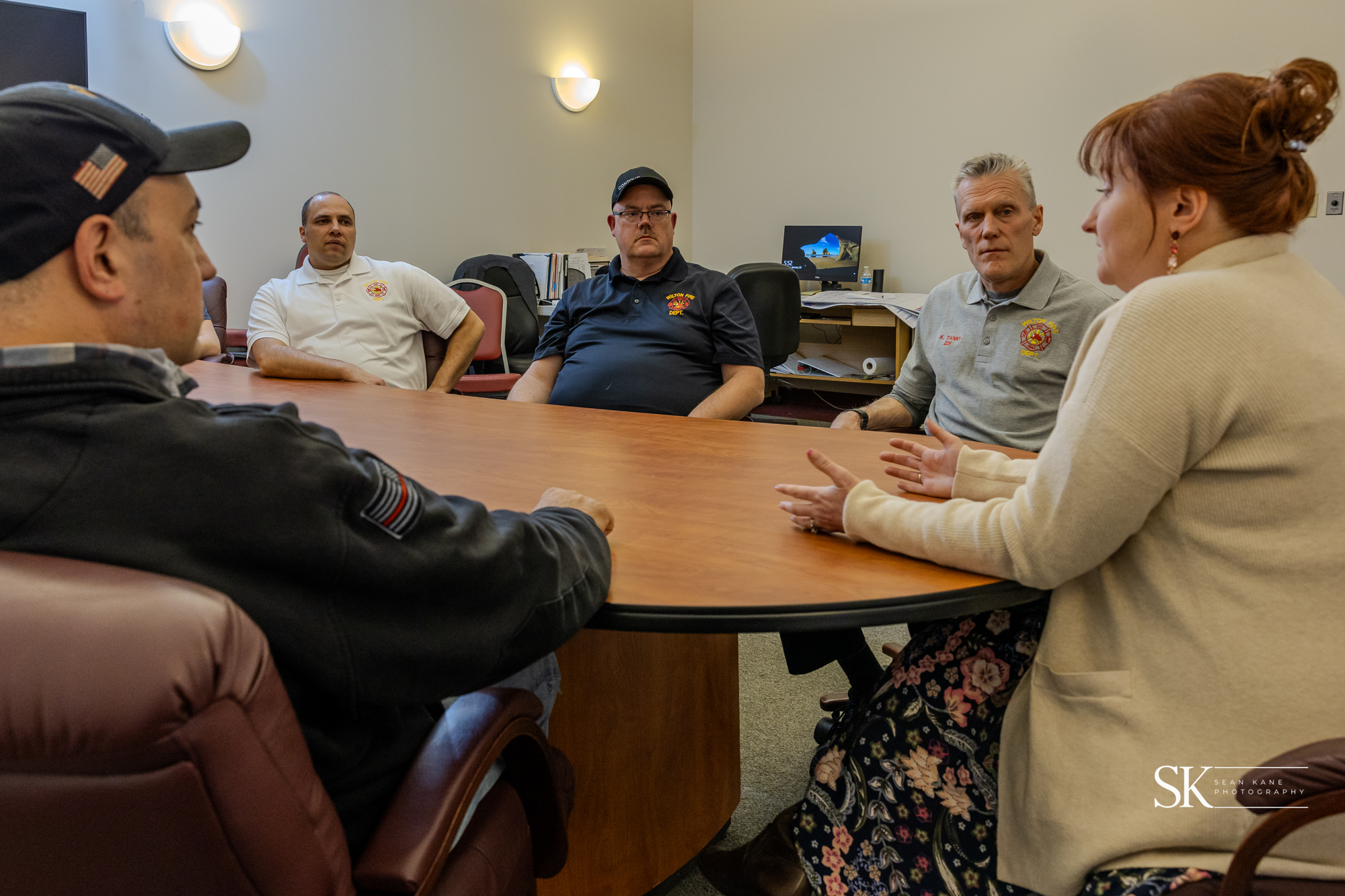
Toward that end, Wilton VFD recently initiated a mental health program. It contracted with Tandi Orluk, a licensed mental health professional, from Set Free Counselling.


Wilton Volunteer Fire Department members participate in a recent mental health roundtable session. From left to right: 1st Assistant Chief Chris Leuzinger, 2nd Captain Chris Brown, Firefighter Keith Tanney, Tandi Orluk (Set Free Counseling), and 1st Lt. Michael Fish.


Orluk, who lives in nearby Ballston Lake and has a background working with veterans and those suffering with PTSD, visits the department every six weeks and talks with members to see how they are doing.

Leuzinger said she creates a “safe atmosphere,” so people feel comfortable disclosing issues they are going through.

Orluk is accessible for follow-up check-ins with team members after challenging incidents. They witness distressing scenes such as gunshot and stab wounds, children’s falls, and animal attacks. Moreover, they load critically injured patients onto LifeNet of NY helicopters, which land at the department’s rear and transport patients to nearby hospitals for treatment.

Leuzinger said firefighters are typically people who want to help others and that’s his motivation behind both programs.

“Changing the culture of the fire service sometimes takes time,” he noted. “I’ve got my guys on board with exercise and my next goal is to get people to buy into the mental piece because your mental health is important as well. After that, I’d like to tackle some of the nutrition aspects as well.

“If somebody can look at what I’m doing and mimic it or take my ideas and help their little chunk of the world,” he concluded, “then that just helps the fire service in New York state overall, and that’s what it’s all about!”

If you’d like to contact Leuzinger about Wilton VFD’s health and wellness programs, you can reach him at assistantchief1@wiltonfiredept.org, or by calling (518) 812-9821.


Nourishing Minds Tutoring has been the leader in private tutoring in the Capital Region for over 9 years. 

We offer qualified, reliable, and knowledgeable tutors who are expert teachers. We take the time to develop a rapport with each student to enable them to reach their fullest academic potential. Simply put, we believe that it is our job to make learning happen.

Continue reading

5 Ways to Push Your Teenager Without Being a Nag

5 Sneaky Ways to Push Your Teenager Academically Without Being a Nag


CHRIS LEUZINGER

Ah, the teenage years – a time of rebellion, independence, and an aversion to anything resembling authority, especially when it comes to academics. As a parent, it can be challenging to navigate the delicate balance between encouraging your teenager to excel academically and avoiding the dreaded label of “nag.”

But fear not! With a bit of finesse and a sprinkle of humor, you can motivate your teen to reach for the academic stars without invoking their wrath.

Here are five sneaky tips to help push your teenager academically, without sounding like a broken record:

  • 1. Become the Stealthy Study Buddy

    Rather than hovering over your teenager like a helicopter parent, why not become their secret study ally? Casually drop hints about interesting facts or tidbits related to their subjects during family dinners or car rides. For example, if your teen is struggling with history, casually mention a fascinating anecdote about a historical figure or event.

    Soon enough, they’ll be intrigued and asking for more information, unwittingly absorbing knowledge like a sponge. Bonus points if you can make it sound like you’re just sharing random trivia for fun!

  • 2. Embrace the Power of Reverse Psychology

    Teenagers have a knack for rebelling against anything they perceive as forced upon them. So, instead of directly telling them to hit the books, try employing some reverse psychology.

    Nonchalantly mention how impressed you are with their recent performance or how you’re amazed at how much they seem to be enjoying their studies lately. By planting the seed that academic success is entirely their idea, you might just spark a newfound motivation to prove you right.

  • 3. Make Learning a Family Affair

    Who says studying has to be a solitary activity? Turn academic pursuits into a family bonding experience by organizing fun and educational activities that everyone can enjoy.

    Whether it’s a trivia night, a historical movie marathon, or a science experiment in the kitchen, finding ways to make learning interactive and entertaining can inspire your teenager to engage more actively with their studies. Plus, it’s an excellent opportunity for some quality family time without the pressure of formal study sessions.

  • 4. Harness the Power of Peer Pressure (In a Good Way)

    Teenagers are highly influenced by their peers, so why not use this to your advantage? Encourage your teenager to study with friends or join study groups where they can collaborate and learn from each other. Peer support and camaraderie can be incredibly motivating, especially when it comes to tackling challenging subjects or preparing for exams. Plus, knowing that their friends are putting in the effort can spur your teen to step up their game without feeling like they’re being pushed by Mom or Dad.

  • 5. Lead by Example (But Don’t Make It Obvious)

    As the saying goes, actions speak louder than words. Instead of constantly badgering your teenager about the importance of education, subtly demonstrate your own passion for learning. Whether it’s picking up a new hobby, enrolling in an online course, or simply sharing interesting articles or books you’ve come across, let your enthusiasm for knowledge be contagious. Your teenager might just follow suit, inspired by your curiosity and drive to expand your horizons.


In conclusion, pushing your teenager academically doesn’t have to involve constant nagging or power struggles. By adopting a strategic and lighthearted approach, you can encourage your teen to excel in their studies while fostering a positive and supportive environment at home. So, go forth and unleash your inner stealth motivator – your teenager’s academic success awaits!


Nourishing Minds Tutoring has been the leader in private tutoring in the Capital Region for over 9 years. 

We offer qualified, reliable, and knowledgeable tutors who are expert teachers. We take the time to develop a rapport with each student to enable them to reach their fullest academic potential. Simply put, we believe that it is our job to make learning happen.

Continue reading