
A Guide to Understanding Executive Functioning in Adolescents

Understanding Executive Functioning
in Kids and Teens


CHRIS LEUZINGER

Executive functioning is a set of cognitive processes essential for controlling behavior and achieving goals. These skills include working memory, cognitive flexibility, and inhibitory control. In children and teens, executive functioning is crucial for academic success, social interactions, and overall development.

Let’s explore what executive functioning entails and provide practical suggestions for improving these skills in young people.

What is Executive Functioning?

Executive functioning refers to a group of mental skills that help individuals manage their thoughts, actions, and emotions to accomplish tasks. These skills include:

  1. Working Memory: The ability to hold and manipulate information over short periods.
  2. Cognitive Flexibility: The capacity to adapt to new situations and think about multiple concepts simultaneously.
  3. Inhibitory Control: The ability to control impulses and resist distractions.
  4. Planning and Organization: Skills required to set goals, develop strategies, and execute tasks efficiently.
  5. Self-Monitoring: The ability to evaluate one’s performance and adjust behavior accordingly.

These functions develop gradually from early childhood through adolescence and into early adulthood. While some children naturally develop strong executive functioning skills, others may need more support and practice.

Improving Executive Functioning Skills

Here are five practical suggestions to help kids and teens improve their executive functioning skills:

  • 1. Create Structured Routines
    • Consistency: Establishing a daily routine helps children and teens know what to expect and when to expect it. Consistency in daily activities such as homework, chores, and leisure time can reinforce their ability to manage time and tasks.
    • Visual Schedules: Use visual aids like calendars or planners to outline daily, weekly, and monthly activities. This helps in planning and maintaining an organized approach to tasks.
  • 2. Set Clear Goals and Break Down Tasks
    • Goal Setting: Teach kids to set specific, achievable goals. This can range from academic targets to personal development goals.
    • Task Breakdown: Encourage breaking down larger tasks into smaller, manageable steps. This makes tasks less overwhelming and helps in developing a step-by-step approach to problem-solving.
  • 3. Encourage Mindfulness and Self-Regulation
    • Mindfulness Practices: Introduce mindfulness techniques such as deep breathing, meditation, or yoga. These practices enhance focus and emotional regulation.
    • Reflection Time: Allocate time for kids to reflect on their day. Discuss what went well, what didn’t, and how they can improve. This practice enhances self-monitoring and adaptive thinking.
  • 4. Promote Active Learning and Problem-Solving
    • Interactive Learning: Use games and activities that require strategic thinking and problem-solving, such as puzzles, board games, or interactive learning apps.
    • Real-Life Challenges: Provide opportunities for children to solve real-life problems, such as planning a family outing or organizing a small project. This enhances their cognitive flexibility and planning skills.
  • 5. Foster a Supportive Environment
    • Positive Reinforcement: Acknowledge and praise efforts and successes in managing tasks and controlling impulses. Positive reinforcement encourages continued effort and builds self-confidence.
    • Supportive Communication: Maintain open lines of communication. Encourage kids to express their thoughts and feelings, and provide guidance when they encounter difficulties. A supportive environment helps children feel safe to take risks and learn from their experiences.
  • 6. Use Technology Wisely
    • Educational Tools: Utilize educational apps and tools designed to improve executive functioning skills. Apps that focus on memory games, organizational tools, and task management can be particularly beneficial.
    • Screen Time Management: Teach children to manage their screen time effectively. Use timers or parental control features to ensure that screen time does not interfere with responsibilities and sleep.

Conclusion

Executive functioning skills are vital for the overall development of children and teens. By creating structured routines, setting clear goals, promoting mindfulness, encouraging active learning, fostering a supportive environment, and using technology wisely, parents and educators can help young people enhance these essential cognitive abilities.

Developing strong executive functioning skills not only contributes to academic success but also prepares children for the complexities of adult life. 


Nourishing Minds Tutoring has been the leader in private tutoring in the Capital Region for over 9 years. 

We offer qualified, reliable, and knowledgeable tutors who are expert teachers. We take the time to develop a rapport with each student to enable them to reach their fullest academic potential. Simply put, we believe that it is our job to make learning happen.


Continue reading

The Benefits of Music Therapy for Students

Exploring the Harmony of Healing:

The Benefits of Music Therapy for Students


CHRIS LEUZINGER

In a world where stressors are abundant and mental health concerns are on the rise, the search for effective coping mechanisms becomes increasingly crucial.

Among the array of therapeutic options, music therapy stands out as a powerful tool for fostering well-being, particularly among students. Through the strategic application of music, board certified therapists harness its innate capacity to heal, offering a unique avenue for emotional expression and personal growth. In this article, we delve into the essence of music therapy and uncover its myriad of benefits for students navigating the complexities of academic and personal life.

Understanding Music Therapy

Music therapy is a specialized form of therapy that utilizes musical interventions to address physical, emotional, cognitive, and social needs. Board certified music therapists employ a variety of techniques, including listening to music, creating music, singing, and engaging in rhythmic activities, tailored to the individual’s goals and preferences. Unlike traditional talk therapy, music therapy transcends language barriers, making it accessible to individuals of all ages and abilities.

Benefits of Music Therapy for Students

  • 1. Stress Reduction:

    The academic demands and social pressures faced by students can often result in elevated stress levels. Music therapy offers a soothing respite from these pressures; providing a safe space for relaxation and self-reflection, coupled with the added benefit of learning various coping strategies.  Through calming melodies and rhythmic patterns, students can alleviate tension, promoting a sense of inner peace and tranquility.

  • 2. Emotional Expression:

    Navigating the tumultuous waters of adolescence can stir up a whirlwind of emotions. Music therapy serves as a constructive outlet for students to express and process their feelings in a non-verbal manner. Whether through improvisation or lyric analysis, music becomes a vehicle for articulating complex emotions, fostering emotional awareness and resilience.

  • 3. Improved Academic Performance:

    The cognitive benefits of music therapy extend beyond emotional well-being, impacting academic performance as well. Research suggests that engaging with music stimulates neural pathways associated with learning and memory, potentially enhancing cognitive functions such as attention and problem-solving.

    By integrating music into study routines or utilizing music-assisted learning techniques, students may experience improved focus and retention of information.

  • 4. Enhanced Social Skills:

    Music has a remarkable ability to forge connections and foster a sense of community. In group settings, such as music therapy sessions, students learn to collaborate, communicate, and empathize with others through musical interactions. These social skills are invaluable, preparing students for success not only in academia but also in their future professional and personal endeavors.

  • 5. Self-Expression and Identity Development:

    Adolescence is a period of self-discovery, where individuals grapple with questions of identity and belonging. Music therapy provides a creative space for students to explore and assert their sense of self through musical exploration and composition. By engaging in the creative process, students can cultivate a deeper understanding of their values, strengths, and aspirations, fostering a strong sense of self-esteem and empowerment.

  • 6. Coping with Mental Health Challenges:

    Mental health concerns, such as anxiety, depression, and trauma, are increasingly prevalent among students. Music therapy offers a holistic approach to mental health care, addressing both the symptoms and underlying causes of distress. Through targeted interventions, such as guided relaxation or lyric analysis, students can develop coping mechanisms and resilience in the face of adversity, promoting long-term emotional well-being.


In the symphony of life, music therapy emerges as a harmonious melody, weaving its therapeutic notes into the hearts and minds of students. With its multifaceted benefits encompassing emotional, cognitive, and social domains, music therapy stands as a beacon of hope for those seeking solace and healing amidst the complexities of student life.

As we continue to unravel the transformative power of music, let us embrace its melody as a catalyst for growth, resilience, and well-being.

To find out more about how music therapy can help you call or book an appointment with Tracey at Nourishing Minds Tutoring!


Nourishing Minds Tutoring has been the leader in private tutoring in the Capital Region for over 9 years. 

We offer qualified, reliable, and knowledgeable tutors who are expert teachers. We take the time to develop a rapport with each student to enable them to reach their fullest academic potential. Simply put, we believe that it is our job to make learning happen.

Continue reading

Building Bodies, Building Minds with Chris Leuzinger

Building Bodies, Building Minds

Inside Wilton VFD’s Cutting-Edge Wellness Program


FEATURING CHRIS LEUZINGER
PHOTOS COURTESY OF SEAN KANE PHOTOGRAPHY

Did you know that Chris, the founder of Nourishing Minds, is also the 1st Assistant Chief of the Wilton Volunteer Fire Department? Check out this article featuring in the FASNY Volunteer Firefighter™ Magazine.

Chris Leuzinger is a man on a mission, a wellness mission.

The 1st Assistant Chief with the Wilton Volunteer Fire Department in Saratoga County wants to provide the 40 firefighter under his command with access to the best health and wellness activities so they can perform their best and return safely to their loved ones after every call.

Ten years ago the Canadian native, who holds an undergraduate degree in exercise science from The University of Lethbridge in southern Alberta, sought to beef up the department’s fitness facilities when he first joined the department.

“We had a gym, but it wasn’t very well appointed,” recalled Leuzinger. “I asked if we could get some more equipment so we could get our guys healthier. They were happy to oblige.”


1st Assistant Chief Chris Leuzinger of the Wilton Volunteer Fire Department prioritizes equipping the 40 firefighters under his command with top health and wellness activities for optimal performance and safe returns to their loved ones after every call. 


Armed with $6,000 from the Chief at the time, Leuzinger, who enjoys CrossFit — the workout that mimics daily activities like squatting, pulling, and pushing — purchased free weights, kettlebells, barbells, and a squat rack.

Over the next few years, he added treadmills, a rowing machine, and a handful of exercise bikes.

“I thought if I can share my background in exercise and health, it will not only help our team be more efficient responding to calls, but also benefit the community in their time of need when we’re responding,” he said.

Leuzinger, who played ice hockey, baseball, competitive badminton, and even Muay Thai during his youth to stay fit, then went a step further. Three years ago he arranged for Max Level Fitness & Athletics in Saratoga Springs to hold one-hour training sessions on Mondays, Thursdays, and Sundays each week at the firehouse.

“In the winter we back the trucks out of the bays and exercise there with our weights,” he said. “Once the weather gets warmer, we open up the doors and make our sessions an inside, outside workout.”

To get participants warmed up, trainers start with simple stretching and mobility exercises before elevating attendees’ heart rates. Workouts constantly shift so that sessions remain fun and different muscle groups are challenged. Exercises can also be modified to account for injuries and less agile members.

By highlighting dynamic movements that replicate the diverse tasks firefighters face during their calls, trainers Danielle Borelli, Heather Lewis, and Amanda Brown have played a vital role in in inspiring every firefighter to boost their physical prowess and overall health.

The classes have proven to be immensely popular, with a remarkable 35% of Wilton VFD’s members, spanning from 16 to 75 years old, actively participating in the dynamic sessions.

Additionally, members have experienced noticeable improvements in their fitness levels and strength. “I know that’s true because I keep having to buy heavier kettlebells and free weights,” he quipped. “That’s tremendously rewarding, and I love seeing it!”

By having instructors come to the department, an expense paid for by Wilton VFD, firefighters save up to $260 per month.

The convenient workout location is also a great recruiting tool, as members can have their immediate family join them while they are put through their paces — a $500 yearly savings!

In addition to enhancing the fitness levels of his firefighters to meet the physical demands crucial for the job, which can be a decisive factor in life-or-death situations, Leuzinger is also committed to supporting his team with any mental health challenges they may be experiencing.

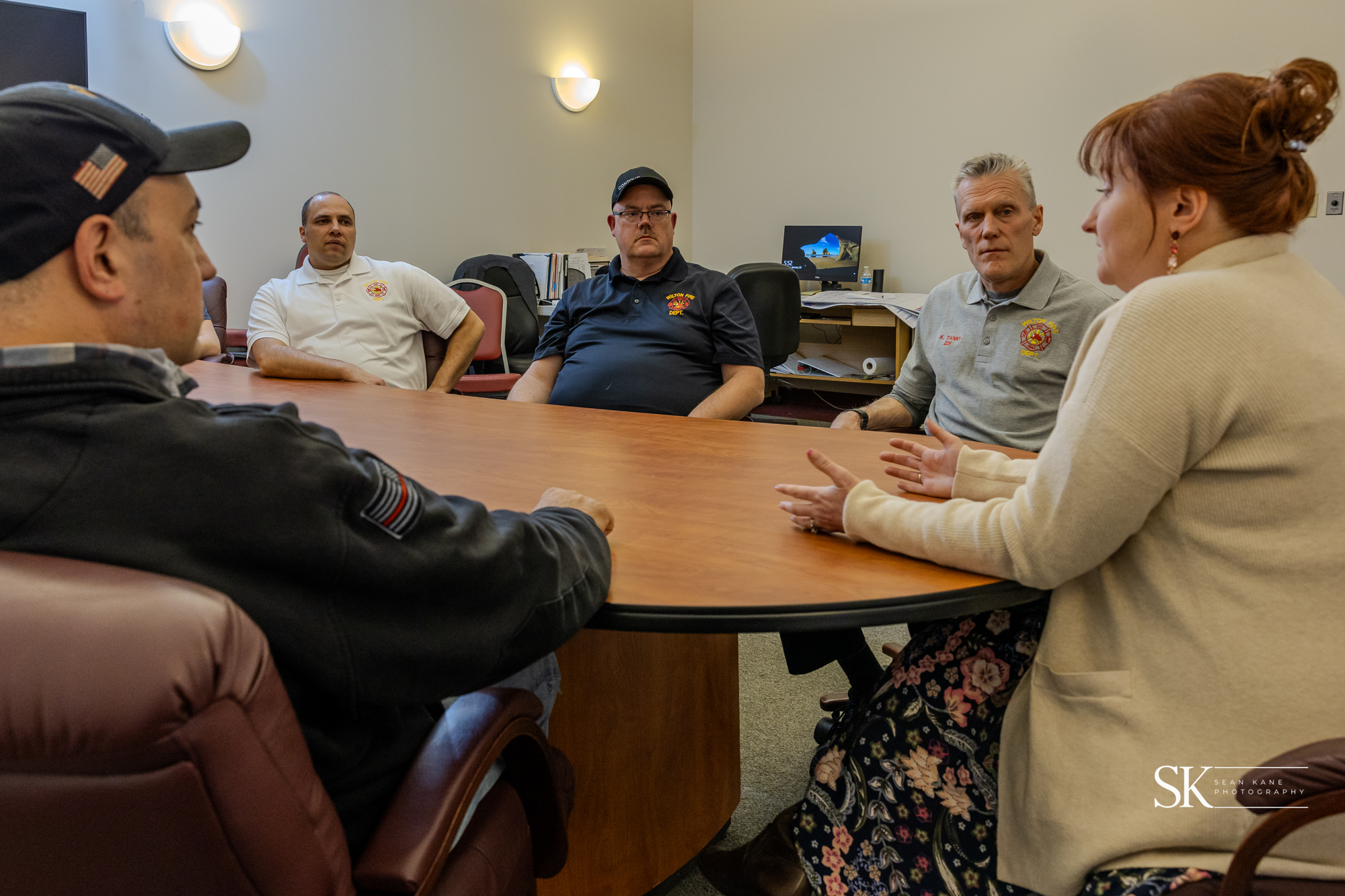
Toward that end, Wilton VFD recently initiated a mental health program. It contracted with Tandi Orluk, a licensed mental health professional, from Set Free Counselling.


Wilton Volunteer Fire Department members participate in a recent mental health roundtable session. From left to right: 1st Assistant Chief Chris Leuzinger, 2nd Captain Chris Brown, Firefighter Keith Tanney, Tandi Orluk (Set Free Counseling), and 1st Lt. Michael Fish.


Orluk, who lives in nearby Ballston Lake and has a background working with veterans and those suffering with PTSD, visits the department every six weeks and talks with members to see how they are doing.

Leuzinger said she creates a “safe atmosphere,” so people feel comfortable disclosing issues they are going through.

Orluk is accessible for follow-up check-ins with team members after challenging incidents. They witness distressing scenes such as gunshot and stab wounds, children’s falls, and animal attacks. Moreover, they load critically injured patients onto LifeNet of NY helicopters, which land at the department’s rear and transport patients to nearby hospitals for treatment.

Leuzinger said firefighters are typically people who want to help others and that’s his motivation behind both programs.

“Changing the culture of the fire service sometimes takes time,” he noted. “I’ve got my guys on board with exercise and my next goal is to get people to buy into the mental piece because your mental health is important as well. After that, I’d like to tackle some of the nutrition aspects as well.

“If somebody can look at what I’m doing and mimic it or take my ideas and help their little chunk of the world,” he concluded, “then that just helps the fire service in New York state overall, and that’s what it’s all about!”

If you’d like to contact Leuzinger about Wilton VFD’s health and wellness programs, you can reach him at assistantchief1@wiltonfiredept.org, or by calling (518) 812-9821.


Nourishing Minds Tutoring has been the leader in private tutoring in the Capital Region for over 9 years. 

We offer qualified, reliable, and knowledgeable tutors who are expert teachers. We take the time to develop a rapport with each student to enable them to reach their fullest academic potential. Simply put, we believe that it is our job to make learning happen.

Continue reading

5 Ways to Push Your Teenager Without Being a Nag

5 Sneaky Ways to Push Your Teenager Academically Without Being a Nag


CHRIS LEUZINGER

Ah, the teenage years – a time of rebellion, independence, and an aversion to anything resembling authority, especially when it comes to academics. As a parent, it can be challenging to navigate the delicate balance between encouraging your teenager to excel academically and avoiding the dreaded label of “nag.”

But fear not! With a bit of finesse and a sprinkle of humor, you can motivate your teen to reach for the academic stars without invoking their wrath.

Here are five sneaky tips to help push your teenager academically, without sounding like a broken record:

  • 1. Become the Stealthy Study Buddy

    Rather than hovering over your teenager like a helicopter parent, why not become their secret study ally? Casually drop hints about interesting facts or tidbits related to their subjects during family dinners or car rides. For example, if your teen is struggling with history, casually mention a fascinating anecdote about a historical figure or event.

    Soon enough, they’ll be intrigued and asking for more information, unwittingly absorbing knowledge like a sponge. Bonus points if you can make it sound like you’re just sharing random trivia for fun!

  • 2. Embrace the Power of Reverse Psychology

    Teenagers have a knack for rebelling against anything they perceive as forced upon them. So, instead of directly telling them to hit the books, try employing some reverse psychology.

    Nonchalantly mention how impressed you are with their recent performance or how you’re amazed at how much they seem to be enjoying their studies lately. By planting the seed that academic success is entirely their idea, you might just spark a newfound motivation to prove you right.

  • 3. Make Learning a Family Affair

    Who says studying has to be a solitary activity? Turn academic pursuits into a family bonding experience by organizing fun and educational activities that everyone can enjoy.

    Whether it’s a trivia night, a historical movie marathon, or a science experiment in the kitchen, finding ways to make learning interactive and entertaining can inspire your teenager to engage more actively with their studies. Plus, it’s an excellent opportunity for some quality family time without the pressure of formal study sessions.

  • 4. Harness the Power of Peer Pressure (In a Good Way)

    Teenagers are highly influenced by their peers, so why not use this to your advantage? Encourage your teenager to study with friends or join study groups where they can collaborate and learn from each other. Peer support and camaraderie can be incredibly motivating, especially when it comes to tackling challenging subjects or preparing for exams. Plus, knowing that their friends are putting in the effort can spur your teen to step up their game without feeling like they’re being pushed by Mom or Dad.

  • 5. Lead by Example (But Don’t Make It Obvious)

    As the saying goes, actions speak louder than words. Instead of constantly badgering your teenager about the importance of education, subtly demonstrate your own passion for learning. Whether it’s picking up a new hobby, enrolling in an online course, or simply sharing interesting articles or books you’ve come across, let your enthusiasm for knowledge be contagious. Your teenager might just follow suit, inspired by your curiosity and drive to expand your horizons.


In conclusion, pushing your teenager academically doesn’t have to involve constant nagging or power struggles. By adopting a strategic and lighthearted approach, you can encourage your teen to excel in their studies while fostering a positive and supportive environment at home. So, go forth and unleash your inner stealth motivator – your teenager’s academic success awaits!


Nourishing Minds Tutoring has been the leader in private tutoring in the Capital Region for over 9 years. 

We offer qualified, reliable, and knowledgeable tutors who are expert teachers. We take the time to develop a rapport with each student to enable them to reach their fullest academic potential. Simply put, we believe that it is our job to make learning happen.
Continue reading

Mastering the SAT or ACT: 5 Tips for Effective Test Preparation

Mastering the 2024 SAT & ACT:
5 Tips for Effective Test Preparation


CHRIS LEUZINGER

As high school students gear up for college applications, conquering standardized tests like the SAT or ACT becomes a pivotal step in their academic journey. Preparing for these exams requires dedication, strategy, and smart study habits.

To help students navigate this process successfully, here are five essential do’s and don’ts for effective SAT or ACT practice.

The Do’s:
  • Create a Study Schedule.

    Establish a structured study routine that allocates sufficient time for each section of the exam. Consistency is key, so aim to study for at least an hour each day. Designate specific days for practice tests and review sessions to monitor progress and identify areas for improvement.

  • Utilize Official Practice Materials.

    Take advantage of official SAT or ACT practice tests and study guides provided by the testing organizations. These resources closely mimic the format and content of the actual exams, giving you an accurate representation of what to expect on test day. Familiarizing yourself with the test format can help reduce anxiety and build confidence.

  • Focus on Weak Areas.

    Identify your strengths and weaknesses across different subjects and question types. Allocate extra time to review challenging topics and concepts, seeking clarification from teachers, tutors, or online resources when needed. By addressing your weaknesses proactively, you can enhance your overall performance and boost your confidence.

  • Practice Time Management.

    Time management is critical during the SAT or ACT, where you’ll need to answer numerous questions within a limited timeframe. Practice pacing yourself by setting time limits for each section and adhering to them strictly during practice tests. Develop strategies for quickly identifying and answering questions, prioritizing easier ones to maximize your score potential.


The Don’ts:
  • Cram at the Last Minute.

    Avoid the temptation to cram all your studying into the night before the exam. Cramming can lead to burnout, anxiety, and subpar performance. Instead, adopt a consistent study schedule weeks or even months in advance, allowing ample time to review material thoroughly and build confidence gradually.

  • Overlook Practice Tests.

    Neglecting practice tests is a common mistake among test takers. Practice tests not only simulate the testing environment but also help you gauge your progress and identify areas needing improvement. Treat each practice test as a valuable learning opportunity, reviewing your mistakes and adjusting your study approach accordingly.

  • Rely Solely on One Study Method.

    Every student learns differently, so it’s essential to explore various study methods and resources. Experiment with flashcards, study groups, online tutorials, and interactive practice platforms to find what works best for you. Incorporating a diverse range of study techniques can enhance comprehension, retention, and engagement.

  • Ignore Test-Taking Strategies.

    Effective test-taking strategies can significantly impact your performance on the SAT or ACT. Familiarize yourself with strategies such as process of elimination, strategic guessing, and skipping difficult questions to maximize your score potential. Practice these strategies during mock exams to refine your approach and build confidence under timed conditions.

  • Underestimate the Power of Self-Care.

    Test preparation can be stressful, but prioritizing self-care is crucial for maintaining balance and well-being. Avoid excessive stress by taking regular breaks, engaging in hobbies, and seeking support from friends, family, or counselors. Remember to celebrate small victories and stay positive throughout your test preparation journey.

Success on the SAT or ACT requires diligent preparation, strategic planning, and a positive mindset. By following these do’s and don’ts, you can optimize your study efforts, boost your confidence, and achieve your desired score on test day.

With dedication and perseverance, you’ll be well-equipped to conquer the challenges of standardized testing and unlock exciting opportunities in higher education.


Nourishing Minds Tutoring has been the leader in private tutoring in the Capital Region for over 9 years. 

We offer qualified, reliable, and knowledgeable tutors who are expert teachers. We take the time to develop a rapport with each student to enable them to reach their fullest academic potential. Simply put, we believe that it is our job to make learning happen.

Continue reading

How to Prepare for the 2024 Digital SAT’s

How to Prepare for the Digital SAT’s


CHRIS LEUZINGER

Studying for the SAT can be a challenging yet rewarding experience, and with the right approach, you can significantly improve your scores.

It is important to note that these tests are the digital version of the SAT and preregistration is required, typically a few weeks prior to the test. Here are some tips to help you navigate the preparation process and increase your chances of success.

  • Understand the Test Format

    Familiarize yourself with the SAT format, including the sections – Reading, Writing and Language, Math (with and without a calculator), and the optional Essay. Knowing what to expect will help you plan your study strategy.

  • Create a Study Plan

    Develop a realistic and organized study plan. Break down your preparation into manageable chunks, covering each section of the test. Allocate time for regular practice tests to gauge your prog

  • Utilize Official SAT Materials

    The College Board, the organization behind the SAT, provides official study materials, including practice tests. These materials closely reflect the actual test format, making them invaluable resources for preparation.

  • Focus on Your Weak Areas

    Identify your weaknesses by taking practice tests and reviewing your performance. Spend more time on the areas where you struggle, whether it’s specific question types or content knowledge.

  • Time Management Skills

    Time is crucial on the SAT. Practice answering questions within the allotted time for each section. Develop effective time management strategies to ensure you complete each section without rushing.

  • Build Vocabulary

    A strong vocabulary is essential, especially for the Reading and Writing sections. Read widely, and make use of vocabulary-building resources. Flashcards and consistent exposure to diverse texts can enhance your word knowledge.

  • Math Practice

    For the Math sections, practice is key. Work on your algebra, geometry, and advanced math skills. Understand the formulas and concepts required and practice applying them to different problem types.

  • Review Mistakes

    Learn from your mistakes. After taking practice tests, thoroughly review the questions you got wrong. Understand why you made the mistake and how to approach similar questions in the future.

  • Simulate Test Conditions

    Take practice tests in conditions similar to the actual exam. Minimize distractions, adhere to time limits, and create an environment that closely mirrors the testing center. This helps reduce test-day anxiety.

  • Stay Healthy & Well-Rested

    Ensure you are well-rested and healthy leading up to the test day. A good night’s sleep and proper nutrition contribute to optimal cognitive function, helping you perform at your best.

  • Test-Taking Strategies

    Familiarize yourself with test-taking strategies, such as eliminating obviously incorrect answer choices, making educated guesses, and moving on if you’re stuck on a difficult question. These strategies can help you maximize your score.

  • Stay Positive

    Maintain a positive mindset throughout your preparation. Confidence can positively impact your performance. Celebrate small victories and stay focused on your goal.

  • Seek Additional Resources

    Consider additional resources, such as review books, online courses, or tutoring if needed! Different approaches work for different people, so explore various study methods to find what suits you best.

By combining these strategies and staying committed to your preparation, you can significantly enhance your performance on the SAT. Remember, success often comes from a combination of hard work, effective study habits, and a positive mindset.

If you need further advice, or would like to be enrolled in an SAT Prep class, contact Nourishing Minds Tutoring. We offer both private and group options. Good luck!

Book a SAT Sesson!


Nourishing Minds Tutoring has been the leader in private tutoring in the Capital Region for over 9 years. 

We offer qualified, reliable, and knowledgeable tutors who are expert teachers. We take the time to develop a rapport with each student to enable them to reach their fullest academic potential. Simply put, we believe that it is our job to make learning happen.

Continue reading

Putting the Wind in Your Sails

Putting the Wind in Your Sails


GLENS FALLS TODAY BUSINESS REPORT

Nourishing children’s confidence through an immense educational ocean.

When Chris Leuzinger left Western Canada for Taiwan, he didn’t know his one-year contract to teach at a private school would turn into four of the best and most formative years of his life.

“I was having the time of my life, so why would I leave?” he said. “I figured out I loved teaching while I was doing it.”

Chris has been on a voyage of discovery ever since. A passionate proponent of education in all its diverse forms, in 2014, he and his wife, Lauren, became co-pilots of Nourishing Minds Tutoring, a ship of scholars guided by a crew of professionally-trained educators— which has grown to as many as 21 during demand peaks— riding the waves of education.

Now in 2014 and back in the US, Chris and Lauren decided to make their home in Lauren’s vibrant and welcoming native hometown of Saratoga Springs. The couple would then use their experience to navigate effectively through the challenge of starting Nourishing Minds Tutoring from scratch. They hit the streets and got the word out (through spots like Northshire Bookstore) then let their work speak for itself.

“That we’ve grown to this point almost 100 percent from word-of-mouth, tells me people are happy and satisfied with what we’re doing – We must be doing something right,” said Chris.

Continue reading

Academic Fun for the Holidays: Engaging Activities to Keep Kids Busy

Academic Fun for the Holidays:
Engaging Activities to Keep Kids Busy!


CHRIS LEUZINGER

The holiday season is upon us, and while the joy of festivities fills the air, parents often find themselves wondering how to keep their kids occupied during the extended break from school. Instead of resorting to endless hours of screen time or mindless activities, why not infuse some academic fun into the mix?

Here are some creative and enjoyable ways to keep kids engaged in learning during the Christmas holidays! ❆

  • ❆ Holiday Reading Challenge

    Encourage a love for literature by organizing a holiday reading challenge. Create a list of age-appropriate books, both fiction and non-fiction, and challenge your kids to complete them during the break. You can even turn it into a friendly family competition with rewards for those who finish the most books or explore different genres!

  • ❆ Science Experiments at Home

    Turn your kitchen into a makeshift laboratory and embark on some exciting science experiments. Simple activities like creating a volcano with baking soda and vinegar or growing crystals can be both educational and entertaining. Explain the scientific principles behind each experiment to make it a learning experience.

  • ❆ Math Games and Puzzles

    Make math fun by incorporating games and puzzles into your holiday routine. Board games like Monopoly or Scrabble can enhance mathematical and language skills. Online platforms also offer a variety of math-oriented games that cater to different age groups. Consider setting up a family game night dedicated to stimulating those numerical brain cells.

  • ❆ Creative Writing Workshops

    Encourage your kids to unleash their imagination through creative writing. Organize short story or poetry workshops where they can express their thoughts and ideas. Provide interesting prompts or themes to inspire their creativity. Not only does this activity enhance their writing skills, but it also fosters a love for storytelling.

  • ❆ Virtual Museum Tours

    Take advantage of the digital age by exploring virtual museum tours. Many renowned museums around the world offer online experiences where kids can learn about history, art, and science from the comfort of their homes. It’s an interactive and educational way to expose them to different cultures and periods.

  • ❆ Learn a new Language

    Introduce your kids to a new language during the holidays. There are numerous language-learning apps and online platforms that make acquiring language skills engaging and enjoyable. Set aside a specific time each day for language lessons, and perhaps even try cooking a traditional dish from the culture you’re exploring!

  • ❆ DIY Science Kits

    Invest in DIY science kits that are readily available in the market. These kits often come with all the necessary materials and instructions for conducting various experiments. It’s a hands-on approach to learning scientific concepts, and the excitement of creating something themselves will keep kids captivated.

  • ❆ Geography Scavenger Hunt

    Transform geography lessons into an adventurous scavenger hunt! Create a list of countries, landmarks, or geographical features, and challenge your kids to find pictures or information about them. This activity not only enhances their geography knowledge but also hones their research skills.

  • ❆ Online Coding Classes

    Coding is a valuable skill in today’s tech-driven world. Enroll your kids in online coding classes or use coding apps that make learning to code enjoyable. Many platforms offer interactive lessons designed for different age groups, making it a fantastic way to introduce them to the world of programming.

  • ❆ Holiday Journaling

    Encourage reflective thinking and writing by starting a holiday journal. Ask your kids to document their experiences, thoughts, and feelings during the break. This not only enhances their writing skills but also provides a personal keepsake of the holiday season.

Incorporating these academic activities into your holiday plans can be a rewarding experience for both you and your kids. It not only keeps their minds active, but also fosters a love for learning that extends beyond the classroom! So let the spirit of curiosity and exploration guide your holiday activities, creating lasting memories filled with both fun and education.


Nourishing Minds Tutoring has been the leader in private tutoring in the Capital Region for over 9 years. 

We offer qualified, reliable, and knowledgeable tutors who are expert teachers. We take the time to develop a rapport with each student to enable them to reach their fullest academic potential. Simply put, we believe that it is our job to make learning happen.

Continue reading

Turning Homework Into a Happy Habit: A Parent’s Playbook

Turning Homework Into a Happy Habit: A Parent’s Playbook


CHRIS LEUZINGER

Most families probably have a routine something like this: wake up, scrounge up a quick breakfast, school, work, rushing to one after-school activity or another, dinner, homework, bed time routines, rinse, and repeat. Then it strikes. “Mom, I have a book report due tomorrow!” 

Feel free to substitute any other school-related assignment that has been procrastinated away until the very last possible second – but most parents with school-aged children can sympathize. Then come the theatrics. The tears. The tantrums. And my personal favorite – “You can’t help me because that’s not how my teacher does it. You’re doing it wrong. You can’t do it that way.”

“AHHHHHH!” Insert choice words here. Pull some hair out, forget about pouring yourself that nice beverage, roll up your sleeves and prepare to spend the next two hours working through the aforementioned book report (which upon further examination little so-and-so has known about for weeks). 

Homework. Isn’t it wonderful? It’s amazing how one little word can wreak such havoc on a household. But it really doesn’t have to be that way..

By following some of the simple tips below you can retrain children to become more independent, eliminate the tantrums (some of them, anyway), and reclaim those lost homework hours – because believe it or not – it is never the teacher’s intention to have any child or family struggling for hours on end to complete an assignment.

  • Consistency and routine

    This is imperative and should be non-negotiable. Like it or not, homework is an important aspect of children’s education, and if approached correctly, is more than just consolidating the work completed in school. Good study habits instilled at a young age translate into more independence in middle school and high school, and even beyond. Children thrive when they know what to expect.

    Try setting a schedule or time aside everyday (this most often works best if it is the same time) to complete homework, and try to keep it brief. 20 – 30 minutes works best. For some children this may be after a snack and some down time, others may work best as soon as they get home, and others maybe after dinner, or before bed.

  • Teach children how to be organized

    If their school has academic planners, encourage children to use them! If not – buy one, or better yet, have them make up their own. Teach children to write down assignments, homework, and when they are due. Refer to this nightly/daily. Again, this reinforces skills that will become invaluable in many different aspects of life. It will also help when they genuinely forget what their homework is.

  • Create a homework space

    Above everything else it should be stocked with all of the necessary materials (paper, pens, pencils, glue, etc.), and be free from distractions. Make homework time a cell phone, TV, computer free time. Unless of course utilizing technology to complete the work. More and more school districts are relying on technology in schools and at home.

  • Motivation

    Be genuinely interested in your child’s work. Ask questions about the work they are completing. Ask if they can teach you the methods they are using. Let’s be honest, Common Core can be confusing at times and in Math for example, you may even learn a new way of problem solving – there are some great methods that are far superior to the old-school ways we all learned.

    Praise good work, and make sure everyone remains positive. This can be one of the single biggest determining factors for success. It will help build their self-esteem, make them feel great about themselves, and translate into an even better effort into their schoolwork.

  • Have patience

    At times learning can be confusing, frustrating, and complicated. All children learn differently, at different rates, and in different ways. Having a positive, patient attitude will go further to support your child’s learning than getting frustrated yourself.

  • Know when to ‘throw in the towel’ and ask for help

    You may be wondering why I included this as a strategy. Surely it seems counterintuitive. However, this can be a powerful tool in making sure children remain positive and motivated to complete homework in the future. As I mentioned above, a normal homework assignment is never designed to take hours upon hours. It helps no one and does more harm that good to try and persevere through a marathon session or sessions.

    Don’t hesitate to follow up with the class teacher and try to get to the root of the problem. Was it a one off experience, or is there a deeper issue or concern making the struggle an everyday occurrence? Understanding the cause of the problem makes it much easier to remedy.

Some of the tips above might seem obvious, but they truly work. It may take some time to develop routines and to teach organization; at times it can be difficult to remain positive and patient; but by taking the time to implement the above strategies there should be fewer tantrums. Fewer tears. Fewer theatrics. And for the love of God – no more last minute book reports!


Nourishing Minds Tutoring has been the leader in private tutoring in the Capital Region for over 9 years. 

We offer qualified, reliable, and knowledgeable tutors who are expert teachers. We take the time to develop a rapport with each student to enable them to reach their fullest academic potential. Simply put, we believe that it is our job to make learning happen.

Continue reading

Everything You Need to Know About Home-Schooling: Buying Local

Buying Local Podcast:
Everything You Need to Know About Home-Schooling

Chris Leuzinger, founder of Nourishing Minds, joins Michael Nelson, owner of Five Towers Media and Glens Falls Today, on an episode of the Buying Local Podcast to talk about home-schooling!

Is it right for your child? How do you get started? How much time does it require? Is it harder in New York State?

They explore the benefits, challenges, and misconceptions around home education, and Chris shares firsthand insights from working with dozens of families navigating this path. Whether you’re curious, considering the switch, or already home-schooling, this conversation offers valuable tips, encouragement, and expert advice to help you make informed decisions.

Watch the episode below!

Big thanks to Glens Falls Today and Five Towers for having us! Make sure to check out their other episodes here.


Nourishing Minds Tutoring has been the leader in private tutoring in the Capital Region for over 9 years. 

We offer qualified, reliable, and knowledgeable tutors who are expert teachers. We take the time to develop a rapport with each student to enable them to reach their fullest academic potential. Simply put, we believe that it is our job to make learning happen.

Continue reading